
Overcoming the ERP Bottleneck Without Full Replacement
Many organisations struggle with core software systems, such as enterprise resource planning (ERP) platforms, that remain essential as central systems of record but create operational bottlenecks. Operations teams frequently rely on manual spreadsheet handoffs, re-entering data across departments, and chasing email approvals to complete routine tasks. Replacing an established ERP platform like SAP is costly, high-risk, and disruptive. However, organisations evaluating alternatives to full replacement can modernise business software by automating manual processes around their existing core infrastructure.
Eliminating Spreadsheet Handoffs While Retaining Core Systems
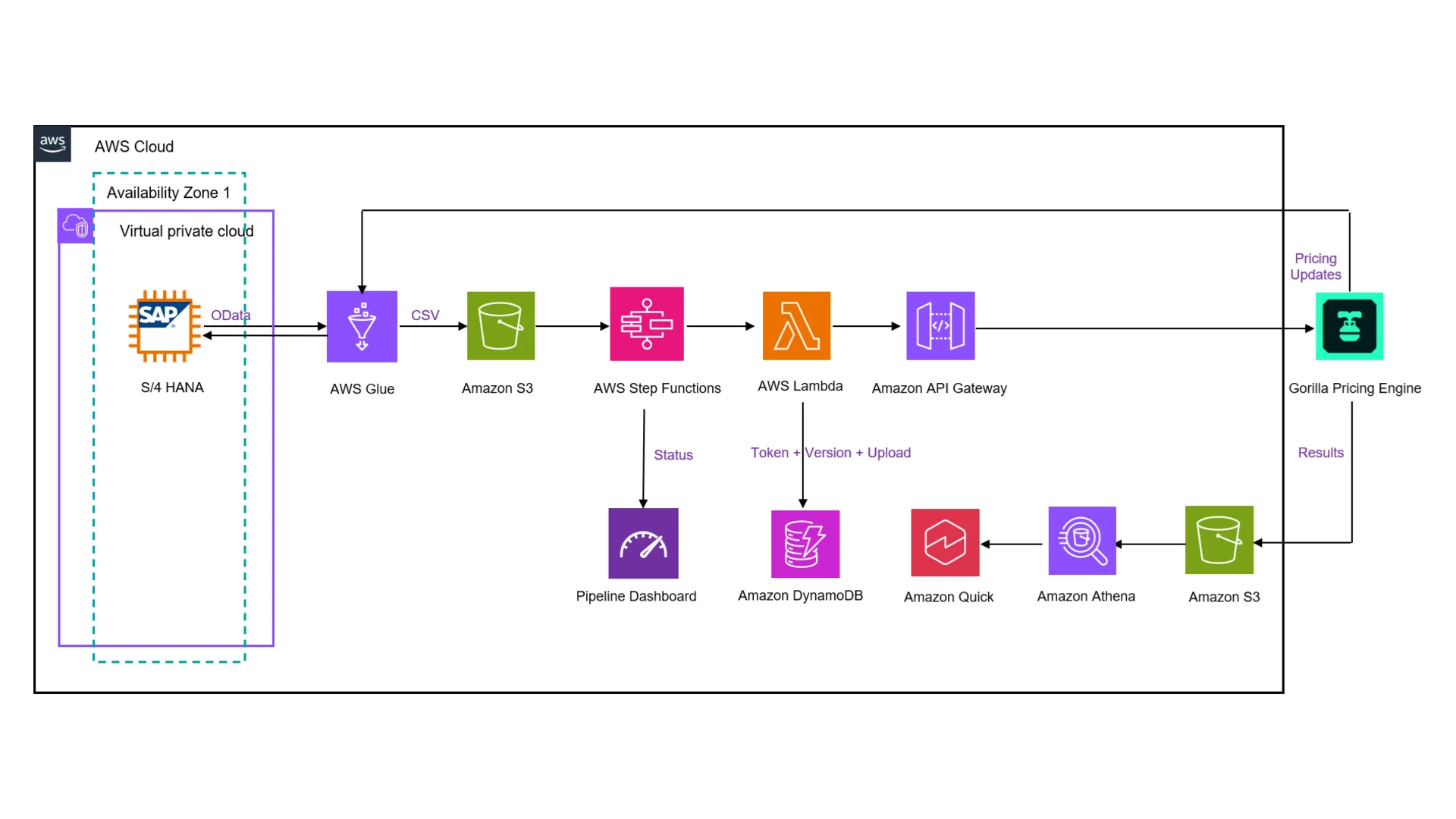
When core enterprise software handles financial or transactional records effectively, replacing it entirely is rarely the most practical path. In many enterprise workflows, the primary operational inefficiency lies not in the central database itself, but in the manual steps required to prepare, validate, and approve data before it reaches the core system. A case study published on 11 September 2026 by AWS and Gorilla (authored by John Gray and co-authors) illustrates how a UK residential energy retailer addressed this challenge. Rather than replacing their central SAP installation, the business introduced an automated workflow orchestration layer around it. In this architecture: SAP remains the central system of record for operational data. External tools perform automated data extraction and complex calculations. Workflow orchestration manages approvals and data validation automatically. Final calculation results flow directly back into SAP. By maintaining existing core software, organisations reduce technical risk, avoid retraining staff on an entirely new platform, and preserve years of integrated business logic.
Distinguishing Calculation Speed from Complete Workflow Timing
When evaluating options to automate manual processes, technical decision makers must carefully distinguish between pure calculation speed and the complete end-to-end turnaround time of a business workflow. In complex pricing and calculation environments, raw data computation may take only seconds or minutes. However, the total elapsed time for a pricebook or financial update often stretches across days or weeks due to manual friction. These delays stem from: Manual spreadsheet preparation and error checks. Sequential handoffs between pricing, risk, and operations teams. Waiting for management sign-off and approval cycles. Automating data extraction and workflow orchestration addresses both aspects simultaneously. While reported figures from the AWS and Gorilla case study describe timeline improvements moving "from weeks to hours," business owners should treat these specific reported savings as vendor and customer claims rather than universal guarantees. Real-world timing improvements depend heavily on existing data quality, integration complexity, and internal approval structures.
Practical Trade-Offs and Actionable Next Steps
Deciding to build automated workflows around an existing ERP involves distinct trade-offs that technical and operational managers must evaluate: Relevant Trade-Offs System Coupling and API Maintenance: Connecting custom automation or third-party engines to core platforms like SAP requires robust API integration. Updates to either platform must be managed carefully to avoid breaking automated data pipelines. Data Quality Governance: Automated data extraction accelerates processes, but it can also accelerate bad data if validation checks are not built directly into the orchestration pipeline. Vendor Reliance vs Custom Flexibility: Integrating third-party platforms introduces ongoing software vendor dependencies, whereas building bespoke internal tools or middleware offers tighter control over proprietary calculation logic. Actionable Next Steps Map Existing Spreadsheet Handoffs: Identify exactly where staff copy data between spreadsheets, core databases, and approval emails. Define the System of Record: Confirm which central ERP or database must remain the authoritative source of truth for accounting and reporting. Pilot Automated Workflow Orchestration: Start by automating a single bottlenecked calculation or data entry path, pushing validated results back into the core platform automatically.
Modernising Workflows with MR Solutions
Modernising business software does not require discarding established core systems. By combining legacy system automation, API integration, and tailored workflow orchestration, organisations can eliminate manual spreadsheet dependencies while keeping their trusted core platforms intact. Where businesses require tailored solutions, MR Solutions builds bespoke applications, workflow automation tools, cloud solutions, and API integrations designed to connect disparate systems seamlessly without forced infrastructure replacements.